Aluminum Alloy Structure Tents vs Steel Structure Tents
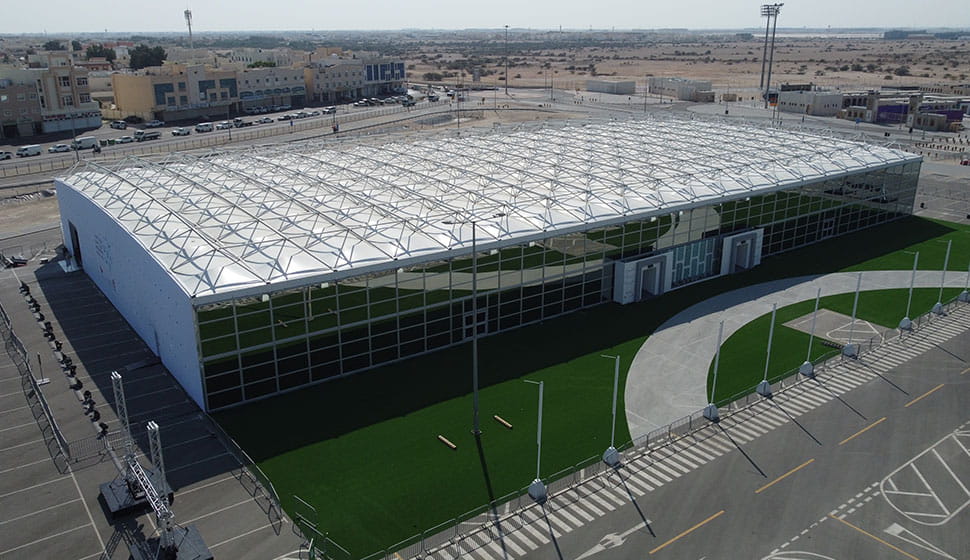
Discover the key differences between KENTEN aluminum alloy structure tents and traditional steel structures. Learn why aluminum offers lighter weight, faster installation, better corrosion resistance, and 100% space utilization for industrial storage tents, exhibition tents, sports venues, and semi-permanent warehouses. Backed by 25 years of expertise and international event experience.
Aluminum Alloy Structure Tents vs Steel Structure Tents: A Professional Comparison
As a leading manufacturer of aluminum alloy structures since 2001, KENTEN has delivered high-quality modular solutions for major global events, including the 2008 Beijing Olympics, 2010 Guangzhou Asian Games, 2022 Beijing Winter Olympics, and Formula 1 Grand Prix venues. Our aluminum alloy frame tents — including industrial storage tents, transparent span tents, exhibition tents, sports tents, atrium tents, wedding tents, and specialized three-story or pyramid structures — provide reliable, efficient alternatives to traditional steel constructions.
With a 50,000 m² modern production base in Zhaoqing, Guangdong, ISO 9001, ISO 14001, and ISO 45001 certifications, plus over 30 patented technologies, KENTEN combines firsthand engineering experience with proven performance. Our structures have served diverse applications worldwide, from logistics warehouses to large-scale sports facilities, demonstrating real-world durability and adaptability.
Core Material Differences
- Aluminum Alloy (KENTEN Standard): Hard-pressed extruded aluminum alloy 6061/T6, typically in 4-channel profiles (e.g., 200×120×4/4.5 mm for 20m spans or larger for wider structures). Naturally forms a protective oxide layer.
- Steel Structures: Usually galvanized or painted carbon steel frames, denser and heavier.
Aluminum density is approximately one-third that of steel (about 2.7 g/cm³ vs. 7.85 g/cm³), resulting in frames that are 60-70% lighter for comparable volumes. This fundamental difference drives multiple practical advantages in temporary and semi-permanent applications.
Key Advantages of KENTEN Aluminum Alloy Structures Over Steel
- Lighter Weight and Easier Transportation
KENTEN aluminum components significantly reduce logistics costs and handling effort. A structure that might weigh hundreds of extra kilograms in steel becomes far more manageable, enabling transport to remote sites or frequent relocation — ideal for peak/off-peak industrial storage or mobile event setups. Real-world deployments show aluminum tents require less heavy machinery and fewer personnel during delivery. - Faster Installation and Dismantling
Modular aluminum designs allow professional teams to erect large clear-span tents (e.g., 20m–70m widths with unlimited length options) in 60-70% of the time needed for equivalent steel frames. For instance, a 1,000 m² structure can often be fully installed in about 8 hours. This speed minimizes downtime for warehouses, exhibitions, or sports venues and supports rapid expansion or relocation without permanent foundation damage. - Superior Corrosion Resistance and Longevity
Aluminum naturally resists rust, even in coastal, humid, or industrial environments, without frequent anti-rust treatments required for steel. KENTEN's high-density PVC or opaque covers further protect against UV, rain, and storms. In harsh conditions, aluminum structures often maintain integrity for 15–20 years with minimal maintenance, compared to steel's shorter effective lifespan (typically 5–8 years without ongoing care). This translates to lower long-term ownership costs. - Excellent Strength-to-Weight Ratio and Clear Span Design
Despite being lighter, KENTEN aluminum frames (e.g., in pyramid, igloo/dome, or A-structure tents) deliver robust load-bearing capacity suitable for wind, snow, and heavy use. The design eliminates internal support columns, achieving 100% usable interior space — perfect for forklift operations in industrial warehouse tents, vehicle access in logistics centers, or unobstructed layouts in exhibition and sports halls (tennis courts, basketball, swimming pools). Eave heights of 4–12 m and ridge heights up to 10–20 m accommodate high stacking or large machinery - Greater Flexibility, Aesthetics, and Environmental Benefits
Aluminum's malleability supports elegant, customizable shapes — from transparent atrium or dome tents that maximize natural light to multi-story or pagoda configurations for weddings and events. Structures are fully recyclable, reusable across multiple projects, and cause minimal site impact. Steel, by contrast, is heavier, more rigid, and often less visually appealing for premium applications. - Cost Efficiency Over Time
While initial material costs for aluminum may be higher, savings in transportation, labor, maintenance, and reusability make KENTEN solutions more economical for temporary or semi-permanent use. Low foundation requirements and quick setup further reduce upfront investment for businesses needing flexible storage or event space.
Typical Specifications (KENTEN Aluminum Structures)
KENTEN offers wide customization. Examples include:
- Clear Span Widths: 20m to 80m+ (unlimited length in bays).
- Heights: Eave 4–12 m, ridge 10–20 m depending on model (e.g., 5 m eave / 10–12.5 m ridge for igloo/dome styles).
- Bay Spacing: Commonly 5 m.
- Frame: 6061/T6 aluminum alloy with hot-dip galvanized connections or ground anchoring.
- Covers: Double-coated PVC polyester — waterproof, UV-resistant, flame-retardant options available.
- Accessories: Insulation, skylights, doors, ventilation, flooring, and solar exhaust fans for enhanced functionality in warehouse or glamping applications.
These parameters support applications like industrial warehousing (high stacking with natural ventilation), sports venues, exhibitions, and weddings.
When Steel Might Still Be Considered
For purely permanent, ultra-high-load installations in stable inland environments where maximum raw rigidity is prioritized over portability, steel can offer certain structural advantages in extreme static loads. However, for the vast majority of event, industrial storage, and modular building needs, aluminum's overall performance profile is superior.
Why Choose KENTEN Aluminum Alloy Structures?
With 25 years of hands-on experience, international project delivery (USA, Europe, Middle East, Asia, Africa), and a commitment to trustworthiness, dedication, and innovation, KENTEN stands as an authoritative partner. Our structures combine engineering expertise with verifiable certifications and real-world success at Olympic-level events.
Whether you need a rapid-deployment industrial warehouse tent, a stunning transparent exhibition structure, or a versatile sports venue, KENTEN aluminum alloy tents provide lightweight strength, corrosion-free durability, and full-space efficiency that outperform traditional steel in most temporary and semi-permanent scenarios.
Contact KENTEN Today for custom solutions